Echoes of the South Bent: Decoding Lil Durk’s Old Days Lyrics — A Lyrical Time Capsule
Echoes of the South Bent: Decoding Lil Durk’s Old Days Lyrics — A Lyrical Time Capsule
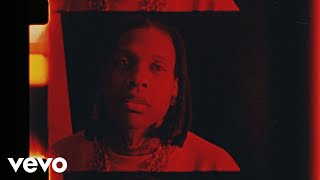
From hoodie-clad streets to intimate storytelling, Lil Durk’s *Old Days* stands as a testament to the raw, nostalgic essence of Chicago rap. More than just a track, it serves as a sonic diary, capturing the weight of youth, pride, and quiet regret through a voice that pulses with unshakable authenticity. Blending vivid imagery with rhythmic precision, Durk revisits a time when life was harder, relationships raw, and memory everything — anchored in the unfiltered reality of his old days.
At its core, *Old Days* distills a bygone era not through romanticization, but through honest lament. Lil Durk’s lyrics weave a tapestry of personal history, set against the gritty backdrop of 2000s Chicago. The track opens with a haunting reflection: *"Back when the blocks were locking tight, I was runnin’ through fire, no turf, just time"*, grounding the listener in a specific moment—tonight, under streetlights, recalling fragments of a life defined by struggle and resilience.
These imagery-rich lines—*“dawn greetin’ the corner where I was born”*—do more than paint a picture; they evoke a visceral sense of place, time, and identity.
The narrative unfolds with quiet introspection, rooted in the rhythms of Durk’s signature production. Each verse builds a layered chronicle of growth shaped by adversity.
Lines like *"Grid up in a world that didn’t care, hold my head high, but my heart stayed rue"* encapsulate the tension between ambition and entrapment, a recurring theme in his body of work. Here, surviving is more than existence—it’s a daily reaffirmation of self, echoed in the metaphor of “holdin’ my head above noise that fades.”
Lil Durk’s lyrical focus on memory reflects a broader cultural current in old-school hip-hop, where storytelling serves as both archive and testimony. *Old Days* aligns with artists like MF DOOM and Young Jeezy, who used concise, cinematic phrasing to document life’s extremes.
Yet Durk’s voice carries a uniquely Midwestern cadence—gruff yet poetic, haunted yet resilient. His references to street corners, early mornings, and forgotten friendsground his lyrics in tangible detail, inviting listeners to step inside a world where every word carries weight.
Lyrically, the track replays pivotal moments with precision.
*"Remember when I’d pack my pockets, no bank account, just a dime for the day, still found light in the dark?"* illustrates how survival bred resourcefulness. It’s not just recollection—it’s legacy in verse. Durk frames youth not as loss, but as a foundational chapter, rich with lessons that continue to inform his present.
The refrain — *"These days ain’t what they used to be, but the story’s still mine"* — underscores continuity amid change, a quiet resistance to erasing lived experience.
Production amplifies this emotional landscape. Sparse beats with gritty hi-hats and a minimalist bassline leave space for lyrics to breathe, while subtle piano chords and distant ambient textures evoke a sense of melancholic nostalgia.
The instrumental restraint mirrors the track’s thematic focus: a world where silence speaks louder than noise, and every lyric lands with purpose.
Analyzing the narrative arc reveals a deliberate pacing—beginning with dawn imagery, moving through pivotal youth moments, and closing with reflective resilience. This structure mirrors the psychological journey of aging: a return to origin, layered with memory, and anchored in hope.
*"They say the past is a prison, but it’s really where the fire began"* crystallizes this duality—acknowledging hardship while affirming its role in shaping strength.
Beyond personal storytelling, *Old Days* resonates within hip-hop’s cultural evolution. Lil Durk bridges old-school values with contemporary sounds, honoring legacy without nostalgia creep.
The track’s authenticity appeals across generations, validating experiences once confined to silence. As Durk himself states in interviews: *"I rap what I lived. The Old Days aren’t gone—they’re in every verse, in every breath."*
In weaving memory, rhythm, and raw emotion, Lil Durk transforms *Old Days* into more than music.
It is a cultural document—a lyrical time capsule that captures not just what was lost, but what endures. Through deceptively simple verses, he affirms that even in a world that moves fast, some truths endure: the grip of the old days, the weight of legacy, and the unyielding pull of self-knowledge. This isn’t just a song; it’s a statement—a quiet declaration that the past shapes the future, one honest lyric at a time.



Related Post

The Pulse of Justice: Matthew Hale’s Insights and Julie Cypher’s 2020 Blueprint at the Heart of Legal Accountability
What Is the Time in Virginia? Decoding the Standard and Edge of the Old Confederacy

Who Is Michele Morrones’ Girlfriend? Unveiling the Identity of Her Current Partner

2 as a Fraction: The Surprising Ways This Simple Number Shapes Math and Science


